
.png)
Why Gay Men Are More Likely to Experience Social Anxiety — and What Actually Helps
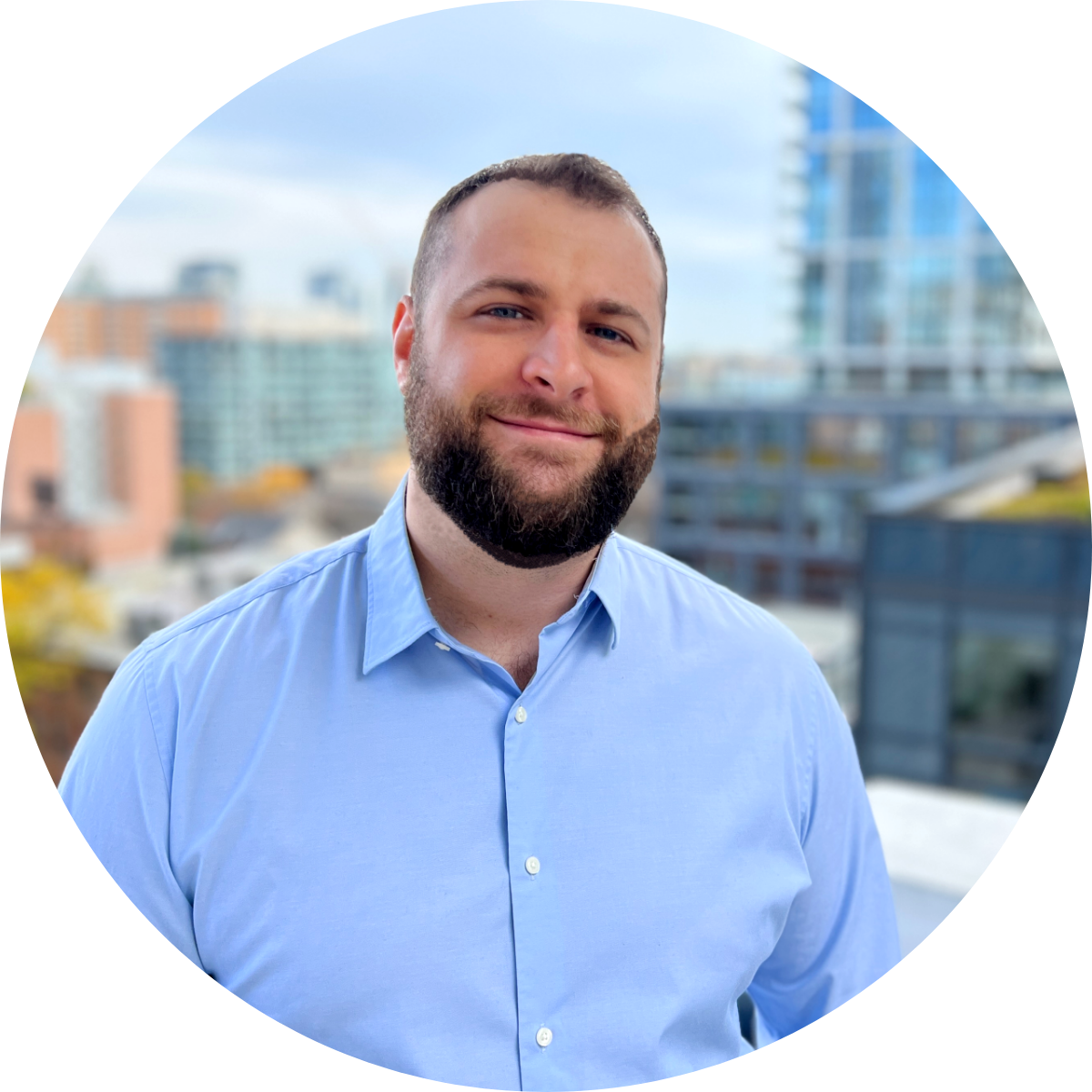
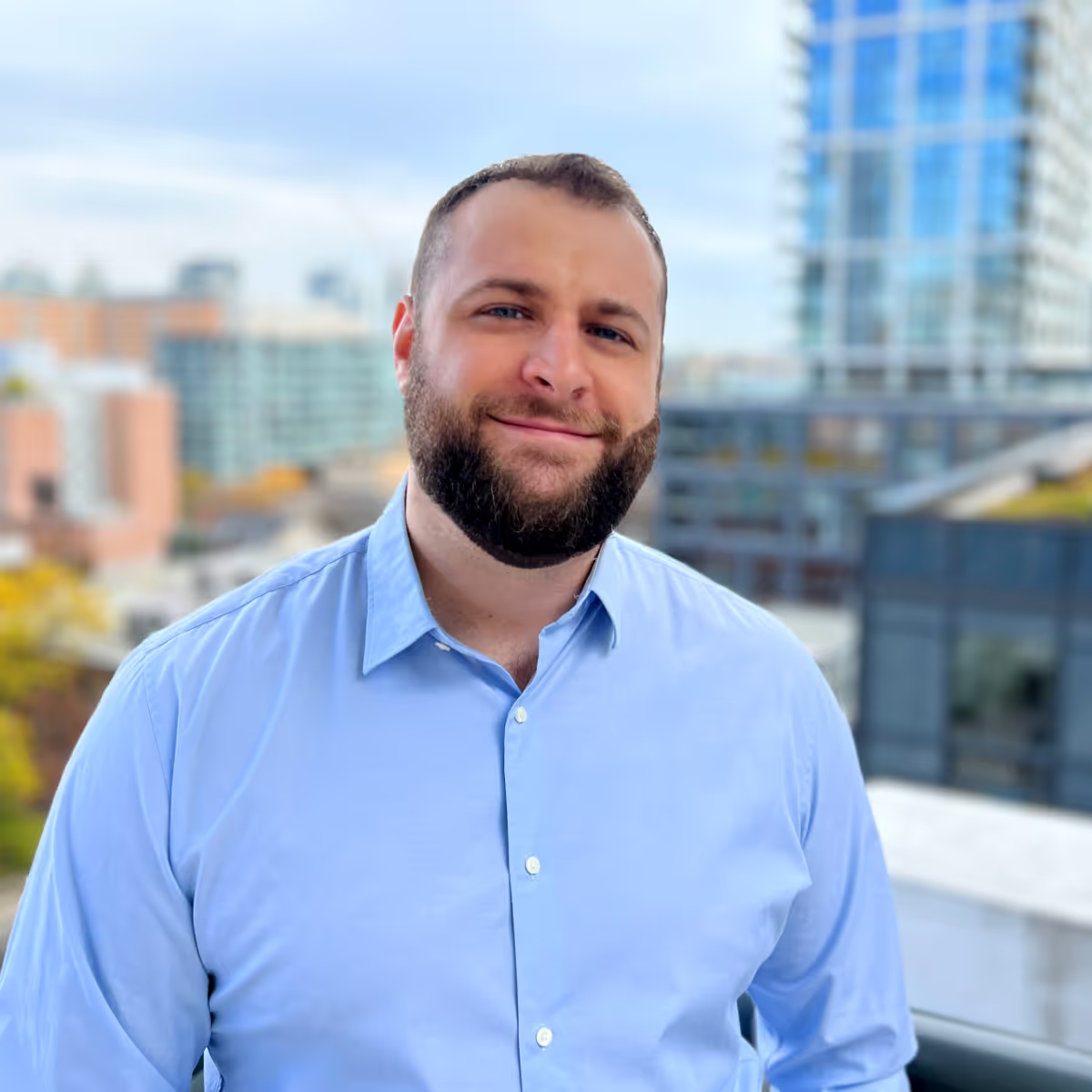
Nick Fink, RP, is the founder and director of Mantra Psychotherapy. He has been practicing as a Registered Psychotherapist for five years and has supported hundreds of clients across the Greater Toronto Area and Ontario.
Nick Fink, RP, is the founder and director of Mantra Psychotherapy. He has been practicing as a Registered Psychotherapist for five years and has supported hundreds of clients across the Greater Toronto Area and Ontario.
You walk into a room and immediately start reading it. Who's here? Is it safe? Will anyone notice me – and if they do, will that be okay? You laugh at the right moments, say the right things, and walk out feeling utterly exhausted without being quite sure why.
For many gay men, this isn't an occasional experience. It's a baseline. And for a long time, it gets misread – as shyness, as introversion, as just being "a bit awkward." What it often is, underneath, is social anxiety that has been quietly shaped by years of navigating a world that wasn't always safe to be yourself in.
This article is about why that happens – and what it looks like to actually get help for it.
Why Gay Men Are at Higher Risk for Social Anxiety
Social anxiety doesn't develop in a vacuum. It often builds through experience – through learning that certain versions of yourself are more acceptable than others.
Research consistently shows that gay and bisexual men experience significantly higher rates of anxiety disorders than their heterosexual peers. A widely cited body of work on minority stress theory explains why: the chronic stress of navigating stigma, discrimination, and a heteronormative world creates a kind of ongoing vigilance that, over time, takes a real toll on mental health. It's not that being gay causes anxiety – it's that growing up gay in environments that treat your identity as wrong, shameful, or invisible teaches your nervous system to stay alert.
A 2024 national study by the Canadian Men's Health Foundation – which surveyed over 2,000 Canadian men using validated clinical measures – found that 45% of gay or bisexual men experience moderate-to-high anxiety, compared to 30% of the broader male population. Statistics Canada data tells a similar story: gay men are almost twice as likely as heterosexual men to report having a mood or anxiety disorder. These aren't abstract statistics – they reflect real patterns in the day-to-day lives of gay men navigating a world that wasn't built with them in mind. Those who are less open about their sexual orientation, or less comfortable with being gay, are especially likely to experience anxiety in social settings – pointing directly to the role that internalized homophobia and concealment play in keeping anxiety alive.
More recent research published in PMC found that gay community stress – including the pressure to fit in, perform, or measure up within queer social spaces themselves – was significantly associated with social anxiety symptoms and social anxiety disorder diagnosis. Which means it isn't only the straight world that can feel threatening. Sometimes the queer world can too.
One of the most common things I hear from gay clients is that they feel anxious in queer spaces just as much as straight ones – sometimes more so. There's an added layer of performance there: being gay "enough," fitting a certain body standard, navigating hookup culture and status hierarchies. Social anxiety in gay men isn't just about fear of rejection from the outside world. It's often about not knowing where you belong at all.
The Role of Shame
At the heart of much social anxiety in gay men is shame – a deep, often wordless sense that something about you is fundamentally wrong or unacceptable. Shame is different from guilt. Guilt says I did something bad. Shame says I am something bad.
For many gay men, shame gets woven into identity during childhood and adolescence – through religious messaging, bullying, family rejection, locker room jokes, or simply the absence of anyone who looked like you and seemed okay. You absorb the message that this part of you needs to be hidden, managed, or fixed. And even after you come out, that conditioning doesn't automatically disappear. The internalized belief that you are somehow too much, not enough, or fundamentally flawed can continue to drive anxiety and self-monitoring long into adulthood.
Research on internalized homophobia consistently links it to higher levels of social anxiety, lower self-esteem, and reduced quality of life in gay and bisexual men. It's a direct pipeline: internalize the message that being gay is wrong, and watch how that shapes every social interaction where your identity might be visible – or where you fear it might be.
I often describe shame as the engine of social anxiety for gay clients. The hypervigilance, the social monitoring, the catastrophizing about how you came across – all of it makes sense when you understand it as a protective response to having learned early that certain parts of you weren't safe to show. Therapy isn't about teaching you not to care what people think. It's about loosening the grip that old shame has on how you move through the world today.
What Helps: Therapy That Actually Gets You
Finding a therapist who understands gay men's mental health matters here. A therapist who doesn't understand the role of minority stress, heteronormativity, and internalized homophobia may inadvertently treat the anxiety as a standalone issue and miss what's actually driving it.
CBT (Cognitive Behavioural Therapy) is one of the most widely used approaches for social anxiety, and it works by targeting the thoughts and behaviours that keep anxiety alive. In practice, this means identifying the automatic predictions anxiety makes — that people are judging you, that you'll say the wrong thing, that being visibly queer will cost you something — and testing those predictions against what actually happens. For gay men, CBT adapted to address minority stress and internalized homophobia goes further: it helps untangle which fears are about the social situation itself, and which are echoes of older messages about what it means to be gay. Gradually, through a combination of cognitive restructuring and structured exposure to avoided situations, the anxiety often loses its grip.
DBT (Dialectical Behaviour Therapy) approaches the problem from a different angle — less about changing thoughts, and more about building the skills to tolerate discomfort without fleeing from it. For gay men navigating social hypervigilance, two DBT skill sets are particularly relevant: distress tolerance, which builds the capacity to stay in an uncomfortable situation rather than escaping it, and interpersonal effectiveness, which helps someone advocate for their own needs in relationships without the anxiety that speaking up will cost them the connection. Together, these skills address the moment-to-moment experience of social anxiety — what to do when the room feels threatening and the urge to disappear is strong.
Underlying all of this is trauma-informed care. For many gay men, social anxiety has roots in experiences of rejection, bullying, or family estrangement that carry real traumatic weight. Therapy that treats only the surface-level symptoms – without acknowledging those roots – may not create lasting change the same way therapy that addresses the roots of the issue.
What queer-affirming therapy offers is a safe space where you don't have to spend the first ten minutes of every session explaining your context. The therapeutic relationship itself – built on genuine understanding and affirmation, not just tolerance – becomes part of the healing.
The shift I see most often in gay clients working on social anxiety isn't about becoming less anxious in every situation. It's about becoming less at war with themselves. When the shame underneath the anxiety starts to loosen – when a client begins to genuinely believe that his identity isn't something to manage but something to inhabit – the social monitoring tends to quiet down on its own. That's the work.
You Deserve a Room That Feels Safe
Social anxiety is treatable. The specific flavour of social anxiety that develops in response to growing up gay in a world that wasn't always affirming – that's treatable too, with the right support.
If you've been looking for LGBTQ2IA+ therapy in Toronto that specifically understands gay men's experiences, you don't have to keep looking for someone who "gets it" before the real work can begin. At Mantra Psychotherapy, that understanding is already in the room. Our clinic serves LGBTQ2IA+ folks living anywhere in Ontario, from Toronto and the GTA, to Ottawa, London, and Hamilton.
Reach out today for a free 15-minute consultation, or use our Therapist Matching Form to find the right fit.
References
Canadian Men's Health Foundation. (2024). 2024 Canadian Men's Health Report: Mental Health Research. https://menshealthfoundation.ca/research/2024-mens-depression-anxiety-study/
Frost, D., & Meyer, I. (2023). Minority stress theory: Application, critique, and continued relevance. Current Opinion in Psychology, 51, 101579. https://www.sciencedirect.com/science/article/pii/S2352250X23000246
Rauh, K. (2023). Functional health difficulties among lesbian, gay and bisexual people in Canada. Statistics Canada, Catalogue No. 45-20-0002. https://www150.statcan.gc.ca/n1/pub/45-20-0002/452000022023003-eng.htm
Soulliard, Z. A., Maiolatesi, A., Manning, R., Wang, K., & Pachankis, J. E. (2025). The moderating role of sexual identity centrality in the association between gay community stress and social anxiety among sexual minority men. Journal of Affective Disorders, 388, 119755. https://doi.org/10.1016/j.jad.2025.119755
Wittgens, C., Fischer, M. M., Buspavanich, P., Theobald, S., Schweizer, K., & Trautmann, S. (2022). Mental health in people with minority sexual orientations: A meta-analysis of population-based studies. Acta Psychiatrica Scandinavica, 145(4), 357–372. https://doi.org/10.1111/acps.13405
Yasin, A. S., et al. (2025). The effect of experienced discrimination and internalized homophobia level in gay and bisexual men on social anxiety level, self-esteem and quality of life. PMC. https://www.ncbi.nlm.nih.gov/pmc/articles/PMC12438430/
Author's note: The content in this article is for educational purposes only. Please speak with a healthcare provider to obtain appropriate recommendations for any mental health concerns.
Looking for a Therapist?
Our team is comprised of experienced counsellors who are prepared to support a range of psychological concerns and personal challenges. Our clinic provides virtual psychotherapy across Ontario.


.avif)

.avif)
.avif)


.svg)
.svg)
.svg)
.svg)

.svg)