There's No Timeline for This: Understanding Grief Therapy

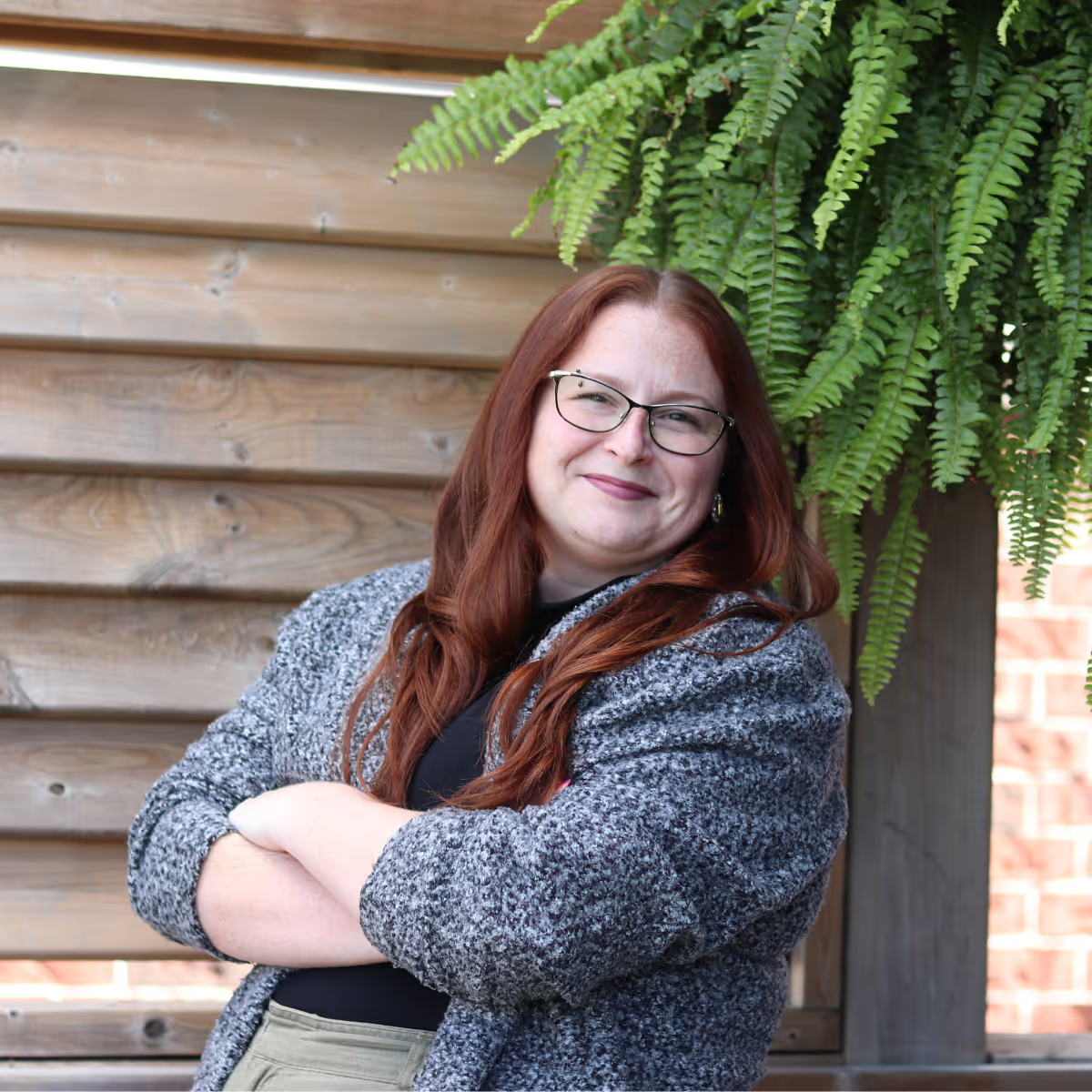
Nick Fink, RP, is the founder and director of Mantra Psychotherapy. He has been practicing as a Registered Psychotherapist for five years and has supported hundreds of clients across the Greater Toronto Area and Ontario.
Nick Fink, RP, is the founder and director of Mantra Psychotherapy. He has been practicing as a Registered Psychotherapist for five years and has supported hundreds of clients across the Greater Toronto Area and Ontario.
One of the most common things people say when they come to me about grief is some version of: "I know I should be better by now." The loss might have been six months ago. It might have been six years ago. It doesn't matter. There's an unspoken timeline most people believe they're supposed to be keeping up with, and almost everyone feels behind on it.
The first thing I want to do in those moments is set that timeline aside entirely.
Grief is not a problem to be solved on schedule. It is a natural response to loss, the price of having loved someone (or something), and it follows its own logic, which often has very little to do with what the calendar says. What grief therapy offers isn't speed. It's a structured, supported way of moving through what grief is actually asking of you, so it doesn't become something debilitating without it ever really shifting.
What Grief Therapy Is (and Isn't)
Before I describe the process, I want to name something that often surprises people: grief therapy isn't about helping you feel better faster. It's about helping you feel what's actually there. For many people, a significant part of the work is learning how to be with grief rather than managing it from a distance, because the management, however understandable, tends to keep it frozen in place.
Grief therapy also isn't only for losing someone to death. I work with people grieving the end of relationships, the loss of a version of themselves, the loss of a future they thought they were going to have. For many of my LGBTQ2IA+ clients, grief shows up in forms that rarely get named as such: grief for family relationships that ended or permanently changed at coming out, grief for years spent hiding, grief for chosen family members whose deaths weren't acknowledged by the people around them. These are real losses. The absence of a social script for them doesn't make them smaller; it often makes them harder to process, precisely because there's no recognized container for the pain.
It's also worth saying that most people who grieve will do so without needing formal grief therapy. A CIHR-funded Canadian study on grief support needs estimates that the majority of bereaved people adapt with general support from their social networks and communities, with approximately 10% needing more focused, specialist grief intervention. Therapy is that specialist level: it's for when grief has become stuck, when it's disrupting your ability to function and connect, or when what you're carrying is too complicated to move through on your own.
Phase One: Stabilization
The first priority in grief therapy is building a relationship where someone feels safe enough to actually be in the room with their grief. That sounds simple, but for people who have been holding it together: at work, for their family, inside their own sense of what they can handle — letting that go even slightly is harder than it sounds.
This phase also involves psychoeducation: helping clients understand what grief actually does, why it disrupts sleep and concentration and physical health, and why the intensity of what they're experiencing makes sense. We begin to understand the nature of the loss itself: who or what was lost, what the relationship meant, what role that person or that life held. And we pay attention to whether what's present is grief doing what grief does, or whether it's becoming something more complicated.
A note from my practice: Stabilization often takes longer than people want it to. There's usually an urgency to get into the hard material and get it over with. But arriving at the deeper work without enough of a foundation tends to be overwhelming rather than productive. Slowing down at the beginning often means better traction later.
Phase Two: Active Processing
This is the core of the work, and the part that asks the most.
Active processing means engaging directly with the loss rather than around it: telling the story of it, sitting with emotions that have been carefully avoided, and working through whatever unfinished relational business the loss left behind. For many people, this includes guilt over things said or unsaid, presence or absence when it mattered most, and anger at the person who was lost, at circumstance, at the plain unfairness of it.
Clinically, I draw on several approaches here. Techniques from Complicated Grief Treatment, including structured revisiting exercises where a client gently returns to the story of the loss to process it rather than continue avoiding it, help grief that has become frozen begin to move again. Narrative work helps people tell and retell their story until it becomes something they can hold rather than something that holds them. Chair work creates space to say what was never said, which can be profoundly releasing when the relationship was complicated or the loss was sudden.
This phase also addresses what grief does to identity. Losing someone central to your life often means losing a version of yourself: the partner, the child, the person who was known and held in a particular way. Part of the work is sitting with that rupture honestly, and beginning to understand who you are now.
A note from my practice: For many LGBTQ2IA+ clients, the active processing phase surfaces a particular kind of grief: grief for family relationships that never fully showed up, grief for years of concealment, grief that was disenfranchised, not acknowledged by the people around them as real loss. One of the things therapy can offer is having that grief witnessed and taken seriously, sometimes for the first time. That witnessing is itself part of the healing.
Phase Three: Integration
Integration doesn't mean the loss stops mattering. It means it becomes something you can carry differently: part of your story rather than the thing that has interrupted your story indefinitely.
This phase involves adapting to a life that has genuinely changed. Practically and relationally, things are different now, and part of the work is understanding who you are and what your life looks like in that changed reality. We do meaning-making work here, not forcing people toward silver linings, but helping them find a relationship to the loss that includes something beyond just pain.
An important part of this phase is what researchers call the continuing bond: the idea that we don't have to sever our connection to the person we've lost in order to move forward. The old model of grief, the idea that you simply let go and move on, has largely been replaced by something more nuanced. Maintaining an ongoing, evolving relationship with the person who was lost can support healing rather than interfere with it. What does it look like to carry someone with you in a way that's healthy, rather than in a way that keeps you frozen? That's often one of the central questions in this phase.
The shift is gradual: from grief as the primary focus, toward relationships, activities, and possibilities in the life ahead. Not as replacements, but as reinvestment.
You Don't Have to Navigate This Alone
Grief is one of the most human experiences there is. And it's also one of the places where people most often feel isolated, behind, and uncertain whether what they're feeling is normal.
At Mantra Psychotherapy, we work with people navigating all kinds of loss: grief and bereavement, relationship endings, life transitions, and the particular losses that don't always have a name — virtually across Toronto and Ontario.
Book a free 15-minute consultation — or use our Therapist Matching Form to get our support in finding the right fit.
References:
Cadell, S., Wright, D. K., Dosani, N., Cherblanc, J., Breen, L., Aoun, S., Sequeira, L., Kortes-Miller, K., Arya, A., Anthony, K., Boudreau, C., Prince, H., Thompson, M., & Macdonald, M. E. (2025). Grief and grief support needs in Canada: A mixed methods protocol. Palliative Care and Social Practice, 19. https://doi.org/10.1177/26323524251334180
Author's note: The content in this article is for educational purposes only. Please speak with a healthcare provider to obtain appropriate recommendations for any mental health concerns.
Looking for a Therapist?
Our team is comprised of experienced counsellors who are prepared to support a range of psychological concerns and personal challenges. Our clinic provides virtual psychotherapy across Ontario.