
.avif)
How to Find an LGBTQ2IA+ Affirming Therapist in Ontario
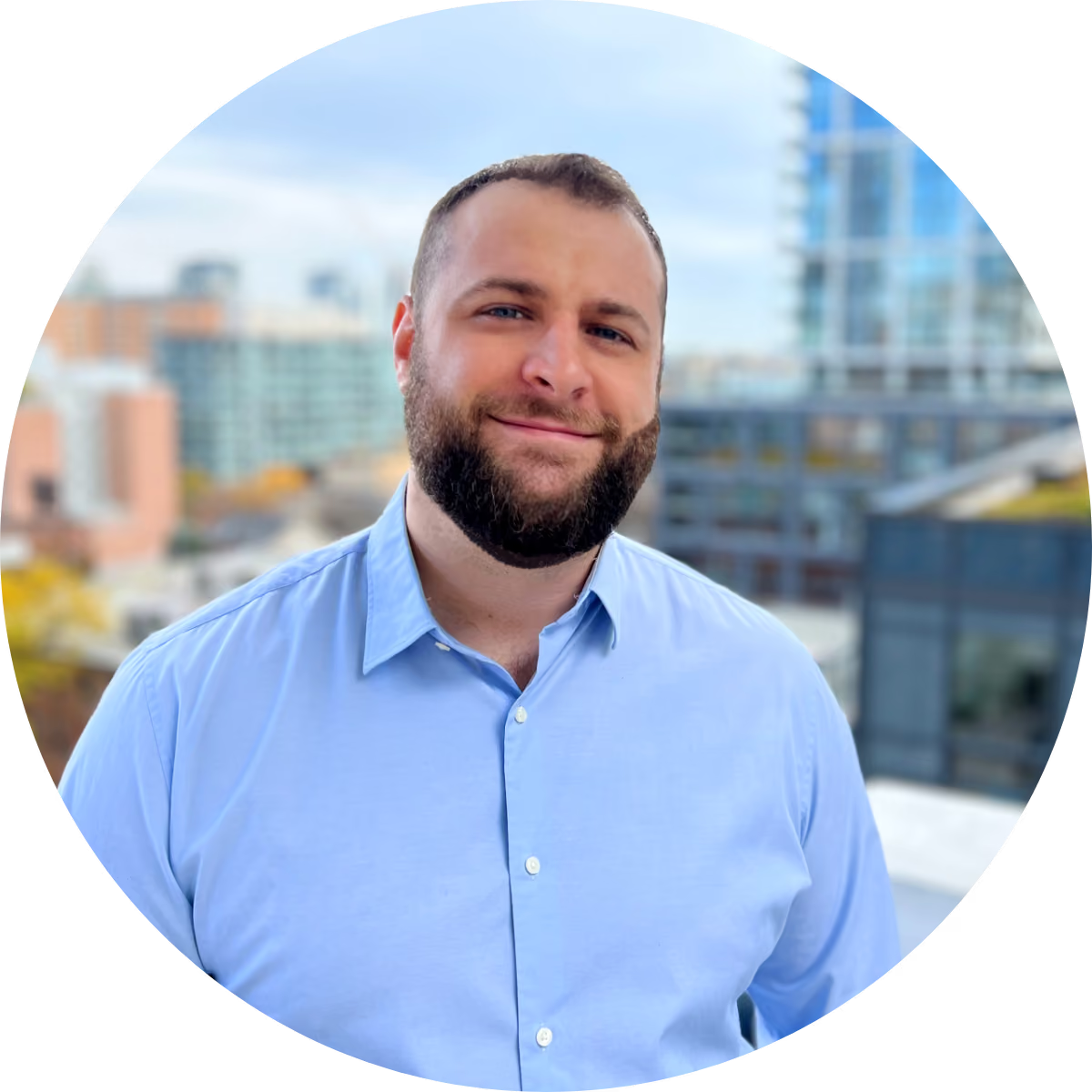
Nick Fink, RP is the founder and director of Mantra Psychotherapy. He has been practicing as a Registered Psychotherapist for five years and has supported hundreds of clients across the Greater Toronto Area and Ontario.
Nick Fink, RP is the founder and director of Mantra Psychotherapy. He has been practicing as a Registered Psychotherapist for five years and has supported hundreds of clients across the Greater Toronto Area and Ontario.
Finding a therapist who truly understands your identity — without you having to explain, justify, or educate them — is a challenge that many LGBTQ2IA+ people experience. For queer people in Ontario, the difference between a general therapist and an affirming one can be the difference between healing and harm.
Here's what to look for, and how to find the right fit.
What Does "Affirming" Actually Mean?
The term gets used loosely, so it's worth unpacking. An affirming therapist doesn't just "accept" your identity — they actively understand it. That means they:
- Have training or significant experience working with LGBTQ2IA+ clients
- Won't treat your identity as the problem to be solved
- Understand concepts like minority stress, internalized shame, and chosen family
- Are familiar with the specific pressures of queer life — not just in theory, but in practice
Affirmation isn't a checkbox. It shows up in how a therapist talks, what they assume, and what they don't make you explain.
Why It Matters More Than You Might Think
Research consistently shows that LGBTQ2IA+ people experience higher rates of anxiety, depression, and trauma — not because of who they are, but because of the environments they've had to navigate. Growing up in a heteronormative world, experiencing family and peer rejection, or managing the daily weight of minority stress takes a real psychological toll.
A therapist who doesn't understand this context can unintentionally cause harm — by treating your identity as incidental, by missing the root of what you're carrying, or simply by making you feel like a guest in a space that was never built for you.
The right therapist won't make you translate your life for them.
What to Look For When Searching
- Explicit language on their website: Affirming practices say so clearly — on their homepage, their about page, and their service pages. If a practice's website is silent on LGBTQ2IA+ inclusion, that silence may indicate that they aren’t well-versed in LGBTQ2IA-related concerns.
- Therapist-specific experience: Look beyond the practice and read individual therapist bios. Do they mention queer clients specifically? Do they list relevant training? A practice can market itself as affirming while employing therapists with little actual experience in this area.
- Virtual availability: For LGBTQ2IA+ clients in smaller Ontario cities or rural areas, virtual therapy is often the only realistic path to affirming care. Practices that offer province-wide virtual sessions dramatically expand your options beyond what's available locally.
- A free consultation: Most therapists will offer an initial consultation — usually 15 to 20 minutes — before you commit. Use it. Pay attention to how they speak, what they assume, and whether you feel seen. Fit matters enormously in therapy, and you're allowed to shop around.
Questions to Ask in a Consultation
You don't have to be passive in this process. Here are a few questions worth asking:
- What experience do you have working with LGBTQ2IA+ clients specifically?
- How do you approach minority stress or internalized shame in your work?
- Are you familiar with [your specific concern — e.g. navigating gay relationships, trans identity, coming out later in life]?
Ontario-Specific Considerations
Ontario has a relatively strong network of affirming therapists compared to other provinces, particularly in Toronto. That said, access still varies significantly depending on where you live, your budget, and whether you have insurance coverage.
A few things worth knowing:
- Insurance coverage: Many Ontario health plans cover Registered Psychotherapists (RPs) and Registered Social Workers (RSWs). Check your benefits before assuming therapy is out of reach financially.
- Virtual therapy: Ontario's College of Registered Psychotherapists allows therapists to see clients anywhere in the province virtually, meaning a Toronto-based affirming practice can serve clients in Hamilton, Sudbury, Windsor, London, or anywhere else in Ontario.
- Sliding scale fees: Some practices offer reduced rates. It's always worth asking.
You Deserve a Space That Was Built for You
The goal of affirming therapy isn't just competence — it's belonging. You should be able to walk into a session (or log on to one) and feel that the space was designed with you in mind, not retrofitted to accommodate you.
At Mantra Psychotherapy, we offer affirming virtual therapy for LGBTQ2IA+ clients across Toronto and Ontario. If you're ready to find the right fit, book a free 15-minute consultation and meet our team.
Author's note: The content in this article is for educational purposes only. Please speak with a healthcare provider to obtain appropriate recommendations for any mental health concerns.
Looking for a Therapist?
Our team is comprised of experienced counsellors who are prepared to support a range of psychological concerns and personal challenges. Our clinic provides virtual psychotherapy across Ontario.



.avif)
.avif)
.avif)


.svg)
.svg)
.svg)
.svg)

.svg)