
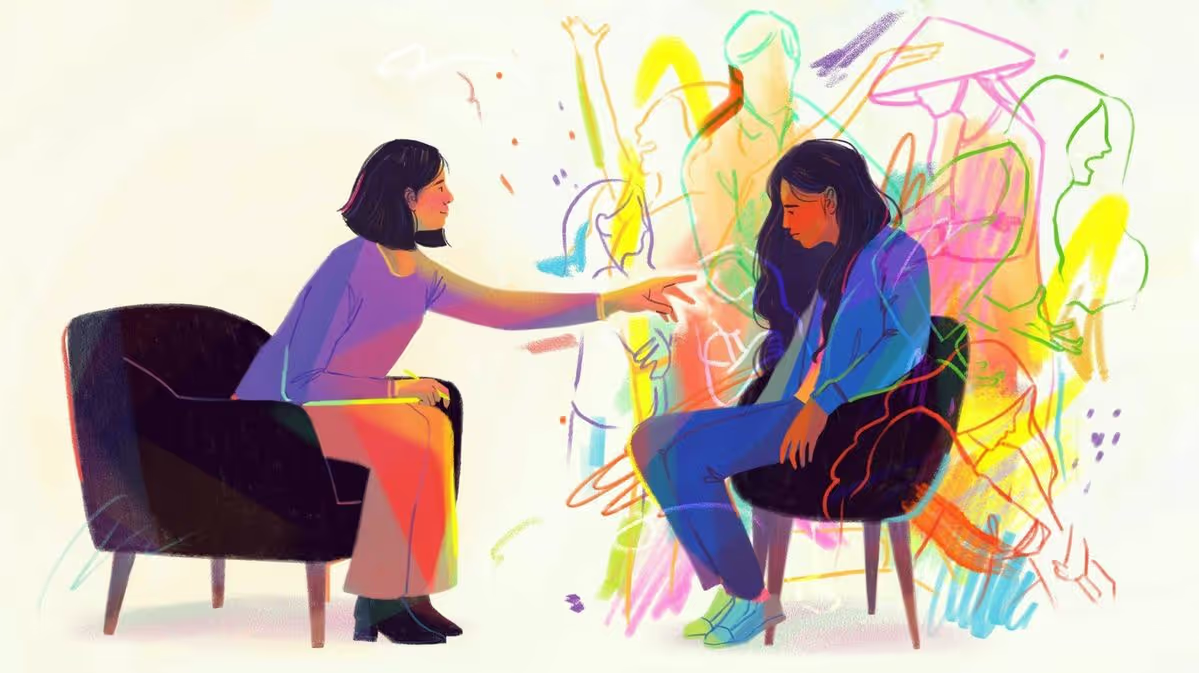
Breaking the Cycle of Interpersonal Trauma

Nick Fink, RP, is the founder and director of Mantra Psychotherapy. He has been practicing as a Registered Psychotherapist for five years and has supported hundreds of clients across the Greater Toronto Area and Ontario.
Nick Fink, RP, is the founder and director of Mantra Psychotherapy. He has been practicing as a Registered Psychotherapist for five years and has supported hundreds of clients across the Greater Toronto Area and Ontario.
Interpersonal trauma occurs within dysfunctional relationships, whether it’s abuse, neglect, or betrayal. This type of trauma can leave deep emotional scars and behavioural effects (trauma responses). Many trauma survivors find themselves repeating some of these dysfunctional patterns in relationships, feeling stuck in a cycle that’s hard to break.
How the Cycle Shows Up
Interpersonal trauma can affect how we see ourselves, others, and the world. Common outcomes of interpersonal trauma include:
• Hypervigilance: Constantly being on alert for danger, even in safe situations.
• Trust challenges: Difficulty believing others will act with care or consistency.
• Repetition: Being drawn to relationships that mirror past harm.
• Self-blame: Feeling responsible for the trauma or its effects.
While the above responses may have been needed at a time in our life, they often prevent us from living a healthy, balanced, and meaningful life.
Breaking the Cycle
Awareness is the first step. This can be enhanced through psychotherapy, where you will also learn to:
• Identify triggers and learn to pause before reacting.
• Set healthy boundaries and communicate your needs clearly.
• Build self-compassion to counter unhelpful self-blame and self-criticism.
• Identify and engage in safe, supportive connections with others.
What Kind of Therapy Would I Need to Manage the Effects of Interpersonal Trauma?
Therapy approaches like Trauma-Focused Cognitive Behavioural Therapy (TF-CBT), Internal Family Systems (IFS), or Somatic Experiencing can provide guidance and tools to navigate these patterns safely.
Our team of therapists draw from these modalities in supporting our clients with interpersonal trauma.
Moving Forward
The cycle of interpersonal trauma can feel endless but it doesn’t have to be permanent. Every moment of awareness, every boundary set, every step toward understanding is a step toward healing.
If you're navigating the effects of interpersonal trauma, We offer trauma-informed virtual therapy across Ontario. Therapeutic approaches like Gestalt therapy, Dialectical behaviour Therapy (DBT) and Cognitive-Behavioural Therapy (CBT) are evidence-based techniques that address relational trauma and support management of its symptoms. For many clients, interpersonal trauma intersects with challenges in emotion regulation, self-esteem, and people-pleasing and boundaries — areas where the relational wounds of the past continue to shape the present. If you're unsure where to start, you can book a free 15-minute consultation or fill out our Therapist Matching Form to get support in finding the right fit.
Author's note: The content in this article is for educational purposes only. Please speak with a healthcare provider to obtain appropriate recommendations for any mental health concerns.
Looking for a Therapist?
Our team is comprised of experienced counsellors who are prepared to support a range of psychological concerns and personal challenges. Our clinic provides virtual psychotherapy across Ontario.



.avif)

.avif)
.avif)


.svg)
.svg)
.svg)
.svg)

.svg)